Category: Politics & Policy

  • Sunshine Protection Act: House Set to Vote on Permanent Daylight Saving Time

    The Sunshine Protection Act, which would make daylight saving time permanent nationwide, is headed for a U.S. House floor vote this week.

    What the Sunshine Protection Act Would Actually Do

    • Makes daylight saving time — not standard time — the new year-round default
    • Ends the twice-a-year clock change entirely: no more “springing forward” or “falling back”
    • States that currently opt out of DST (Hawaii, most of Arizona) could exempt themselves and keep standard time permanently
    • If passed, it would still need Senate approval before becoming law

    Sponsored in the House by Rep. Vern Buchanan and in the Senate by Sen. Rick Scott, this version specifically locks in the “spring forward” time rather than the “fall back” one — a distinction that has repeatedly split Congress and derailed past attempts.

    How the Bill Reached This Point

    The Sunshine Protection Act isn’t new — it has been introduced repeatedly across multiple sessions of Congress. In 2022, the Senate actually passed a version by unanimous consent, but several senators later said they would have objected had they realized it could pass that easily. That version expired at the end of the year without a House vote.

    This time around, the bill has moved further than in years past:

    • May 2026: language from the bill was folded into a larger transportation funding package that passed a roll-call vote in the House Energy and Commerce Committee, 48-1
    • July 2026: the full House scheduled a floor vote for the week of July 13
    • President Trump has publicly backed the bill, calling it “a very nice WIN for the Republican Party” on Truth Social

    Six Competing Bills, One Unresolved Fight

    Part of why permanent time change has failed for years isn’t lack of support — it’s that Congress can’t agree on which time to lock in. As of July 2026, there are six separate bills addressing the issue:

    BillWhat it does
    Sunshine Protection Act (House/Senate)Permanent daylight saving time nationwide
    The Daylight Act (Rep. Celeste Maloy)Lets states opt into year-round DST
    Rep. Mike Rogers’ billCloses a legal gap so states can choose year-round DST (mirrors existing standard-time opt-out)
    Sunshine for Our Kids ActPermanent standard time, with state opt-in for DST
    The Daylight Act of 2026 (Rep. Greg Steube)“Half-daylight saving time” — clocks move forward just 30 minutes, permanently
    New standard-time bill (Reps. Scanlon & Harrigan)Permanent standard time, with exceptions

    Only the Sunshine Protection Act has cleared committee and reached the floor; the other five remain stuck in the House Energy and Commerce Committee.

    The Case for Each Side

    Arguments for permanent daylight saving time:

    • Ends the disruption of switching clocks twice a year
    • Supporters link the biannual change to increased workplace injuries and traffic accidents in the days following each switch
    • More usable evening daylight for activities after work or school

    Arguments for permanent standard time:

    • Numerous sleep and health researchers argue standard time aligns better with the body’s natural circadian rhythm
    • Opponents like Sen. Tom Cotton warn permanent DST would create extremely late winter sunrises, forcing children to walk to school in the dark
    • The American Academy of Sleep Medicine has publicly favored standard time as the healthier year-round option

    A 2023 YouGov poll found 62% of Americans want to stop switching clocks altogether — but even among that group, opinion splits: about half prefer permanent daylight time, 31% prefer permanent standard time, and the rest have no strong preference.

    A History of False Starts With Permanent Daylight Saving Time

    The U.S. has tried permanent daylight saving time before, and it didn’t stick. Congress enacted a year-and-a-half experiment with year-round DST from January 1974 to April 1975, under the Emergency Daylight Saving Time Energy Conservation Act — but ended it early, in October 1974, after public backlash centered on the same concern raised today: children waiting for school buses in the dark.

    What Happens Next

    If the Sunshine Protection Act clears the House this week, it still faces the same obstacle that has killed previous attempts: Senate approval, followed by presidential signature. Given that a prior Senate version passed unanimously in 2022 only to stall in the House, and this year’s House vote follows years of competing bills going nowhere, whether 2026 actually becomes the year the clock-changing ritual ends remains genuinely uncertain. Unless some version of this legislation is signed into law before November, Americans should still expect to set their clocks back on November 1 as usual.
  • Lindsey Graham Death: Senator Dies Suddenly at 71

    The Lindsey Graham death has sent shockwaves through Washington and beyond, with the four-term South Carolina Republican senator dying Saturday evening, July 11, 2026, after what his office described only as a “brief and sudden illness.” He was 71.

    What We Know

    Graham’s office confirmed his death in a statement posted to social media, offering no further details about the cause. The statement said his family “appreciates prayers at this time and asks for privacy during this incredibly difficult period.” He was running for a fifth Senate term at the time of his death.

    The sparse nature of the announcement comes amid a broader stretch of concern in Washington over transparency about lawmakers’ health, following incidents involving other members of Congress being absent without early explanation.

    A Four-Decade Career in Public Service

    Graham was first elected to the U.S. Senate in 2002 after serving in the U.S. House throughout the 1990s, where he backed policies aimed at isolating Iran and limiting its missile and nuclear programs — a hawkish foreign-policy stance that defined much of his career. He also served in the U.S. Air Force and Air National Guard, including deployments where he trained Afghan Army legal officers during his annual training commitments.

    Graham briefly ran for the Republican presidential nomination in 2016 and was a vocal critic of Donald Trump during that campaign. He later became one of Trump’s closest allies in the Senate, frequently advising him on foreign policy matters involving Iran and Russia. Just two days before his death, while visiting Kyiv, Graham announced that lawmakers had reached an agreement with the White House on a Russia sanctions bill — a deal that may stand as his final major legislative achievement.

    Tributes From Washington and World Leaders

    President Trump called Graham “one of the greatest people and senators I have ever known” in a social media post, adding that he “was always working, and was a true American Patriot.”

    Senate Majority Leader John Thune said Graham’s “long and dedicated service in the Air Force and in Congress carried him to far-flung regions of the world,” while South Carolina Governor Henry McMaster called him “irreplaceable.”

    International tributes reflected Graham’s extensive foreign-policy relationships. Ukrainian President Volodymyr Zelenskyy, who had met with Graham in Kyiv just days before his death, called him “a true defender of freedom” and noted he had visited Ukraine ten times since Russia’s full-scale invasion began. Israeli Prime Minister Benjamin Netanyahu called Graham a “great friend of Israel,” and NATO Secretary General Mark Rutte said he was “so sad to learn of the sudden passing of my friend.”

    What’s Next

    No details on funeral arrangements had been announced as of publication. South Carolina Governor Henry McMaster will be responsible for naming a replacement to fill Graham’s Senate seat until a special election can be held.

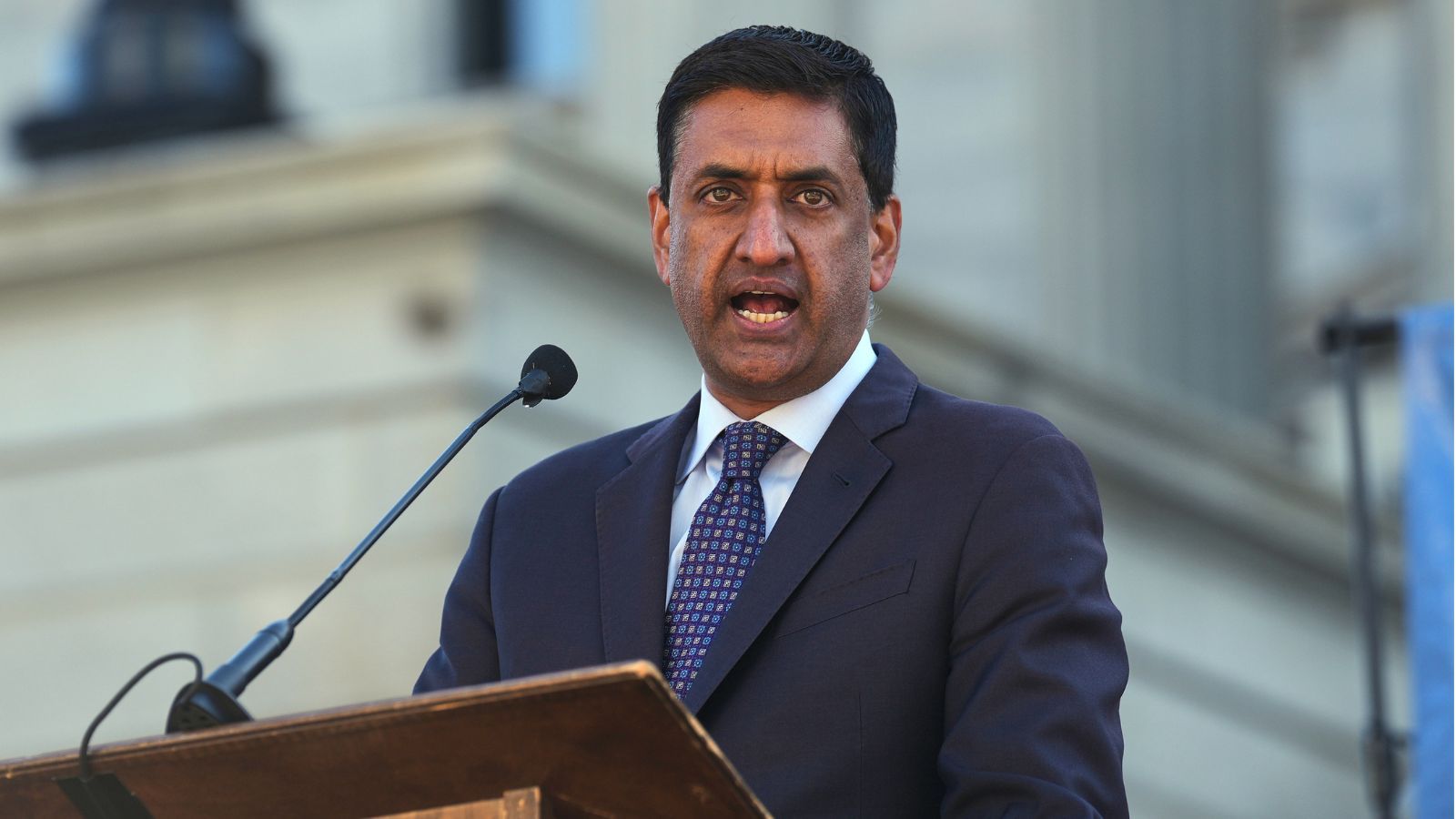
  • Congressman Ro Khanna Says He Was Detained by Israeli Settlers in the West Bank

    Congressman Ro Khanna, a California Democrat, said he was detained for over an hour by armed Israeli settlers in the occupied West Bank on Wednesday, July 8, 2026, in an incident that has drawn national attention and sharply divided political reaction. The Israeli military disputes key parts of his account.

    What Khanna Says Happened

    Khanna, who represents California’s 17th district in Silicon Valley, said the incident occurred while his group was visiting Khirbet Zanuta, a small Palestinian Bedouin village in the southern West Bank that had been abandoned and demolished following escalating settler attacks. According to Khanna and an aide who was present, a vehicle carrying armed men blocked the narrow road out of the village, and the men began shouting and kicking the group’s minibus. Khanna said the settlers were carrying American-made M4 rifles.

    Khanna said Israeli military vehicles then arrived, but rather than clearing the settlers, soldiers spoke with them and moved a car to further block the road, extending the standoff. He said the group was eventually released after appeals to the U.S. Embassy in Jerusalem and intervention from Israeli police, roughly 90 minutes after it began. “I felt powerless in that situation, which is not an easy thing, as I have a lot of privilege in life,” Khanna said, adding that he wanted people to consider what similar treatment might be like for Palestinians without his platform or protection.

    A New York Times photographer traveling separately reportedly witnessed the confrontation, and CNN said one of its own crews was also present, having traveled to the area to cover the anniversary of a Palestinian-American man’s killing by settlers.

    The Israeli Military’s Response

    The Israel Defense Forces confirmed it received a report of Israeli civilians blocking the vehicles of foreign nationals and members of the press near the village, and said troops were dispatched and “quickly dispersed the Israeli civilians and reopened the blocked road.” The IDF disputed the characterization that its own soldiers detained the group, saying its troops did not take part in blocking the road. Separately, Israeli police reportedly noted the area was a closed military zone where civilian access is restricted.

    Political Reaction

    Reaction has split along familiar lines. The Council on American-Islamic Relations (CAIR) called on Congress to condemn the incident, with its national executive director arguing that if an elected American official can be stopped and intimidated, it illustrates what Palestinians face daily without similar protection or attention.

    Conservative commentators and outlets have been more skeptical, with some suggesting the timing was convenient given separate political turbulence Khanna faced days earlier over his public support for Maine Senate candidate Graham Platner, who withdrew from his race following a rape allegation. Some critics online and in conservative media argued Khanna was using the incident to distract from that controversy or to raise his profile as he weighs a 2028 presidential run — a possibility Khanna has openly acknowledged considering, telling Reuters he was “more resolved to consider it after this trip.”

    Broader Context

    The West Bank has seen a rise in settlement construction and settler violence against Palestinians in recent years. According to the Israeli rights group Yesh Din, fewer than 1% of complaints against settlers between 2016 and 2024 resulted in indictments. The United Nations considers Israeli settlements in the West Bank illegal, while the Israeli government has said instances of serious settler violence are exceptions and has condemned the worst cases.

    Khanna is not the first American political figure to visit the region amid the ongoing war in Gaza and its aftermath — U.S. lawmakers from both parties, including House Speaker Mike Johnson and Democratic Senators Chris Van Hollen and Jeff Merkley, have made similar trips over the past year. In May 2025, IDF troops fired what the military called “warning shots” near a delegation of diplomats visiting the West Bank, drawing criticism from several allied nations.

    As of publication, no further action has been announced by Congress or the Israeli government regarding the incident.

  • Birthright Citizenship: Supreme Court Strikes Down Trump’s Executive Order

    Birthright citizenship remains guaranteed after the Supreme Court ruled 6-3, striking down Trump’s executive order seeking to end it.

    What the Supreme Court Actually Decided

    In Trump v. Barbara, Chief Justice John Roberts wrote the majority opinion holding that children born in the United States to parents who are unlawfully or temporarily present are “subject to the jurisdiction” of the country and are therefore citizens at birth under the Citizenship Clause of the Fourteenth Amendment. Roberts was joined by fellow conservative justices Amy Coney Barrett and Brett Kavanaugh, along with the court’s three liberal justices — Sonia Sotomayor, Ketanji Brown Jackson, and Elena Kagan — producing a 6-3 result with a narrower 5-4 split specifically on the constitutional question. Justices Clarence Thomas and Samuel Alito, joined in parts by Neil Gorsuch, dissented.

    Roberts grounded the ruling in a direct line from English common law through the ratification of the Fourteenth Amendment in 1868 to the Supreme Court’s landmark 1898 decision in United States v. Wong Kim Ark, which had already established that children born on U.S. soil to non-citizen parents are citizens, with narrow exceptions such as children of foreign diplomats. “The trouble is that there is scant evidence for this dramatically revisionist view,” Roberts wrote of the administration’s reinterpretation. “The Framers of the Fourteenth Amendment extended that promise to ‘every free-born person in this land.’ We keep that promise today.”

    The Birthright Citizenship Order That Started the Case

    President Trump signed the executive order at the center of the case on January 20, 2025, his first day back in office. It sought to deny automatic citizenship to babies born in the U.S. to parents who were either in the country illegally or on temporary legal status. The order was scheduled to take effect 30 days later but never did — multiple federal judges blocked its enforcement almost immediately, with one describing it as “blatantly unconstitutional.”

    The case reached the Supreme Court through an unusual path. After the administration lost repeatedly in lower courts, it first asked the justices to rule on whether courts could issue nationwide injunctions at all, a separate procedural fight the administration won earlier. That left the door open for a new challenge: a federal judge in New Hampshire issued a class-wide injunction protecting babies born after February 20, 2025, from the order’s effects, and the Trump administration appealed that ruling directly to the Supreme Court, skipping the appeals court. The justices agreed to hear the case in December 2025, heard oral arguments on April 1, 2026 — a session notable for Trump becoming the first sitting president to attend oral arguments in an active Supreme Court case — and ruled roughly three months later.

    Trump’s Reaction and What Happens Next

    Trump reacted to the loss on social media, calling the ruling “too bad for our country” and urging congressional Republicans to pass legislation restricting birthright citizenship instead. That path faces long odds: public opinion polling has consistently shown strong support for birthright citizenship as it currently exists, and Roberts’ own opinion suggested that a full reversal would likely require a constitutional amendment rather than ordinary legislation — though he noted Congress retains some ability to legislate around administrative edges, such as codifying exceptions for children of parents unlawfully or temporarily in the country.

    The ruling arrived amid a broader run of immigration-related wins for the Trump administration at the Supreme Court in recent months, including decisions allowing the effective end of Temporary Protected Status for residents of some crisis-affected countries. Birthright citizenship, though, proved to be a line the court’s majority — spanning both its conservative and liberal wings — was unwilling to cross.

    The Historical Stakes

    Government data cited in coverage of the case estimated that roughly 150,000 children are born each year in the U.S. to parents who are not legal permanent residents — the population most directly affected by the now-voided order. Cecillia Wang of the ACLU, who argued the case and is herself a birthright citizen born to Chinese immigrant parents, framed the stakes during arguments around the amendment’s original purpose: conferring citizenship on the child rather than the parent, so that no one is denied their place in the political community based on circumstances of birth. That principle, first tested by Wong Kim Ark more than a century ago, remains intact.

  • União Brasil rompe com governo Lula e mira eleições 2026 com pré-candidatura própria

    União Brasil se afastou formalmente do governo Lula e caminha para as eleições 2026 com federação ao PP e pré-candidatura própria ao Planalto.

    Como o União Brasil chegou a este momento

    O União Brasil nasceu da fusão entre o Democratas (DEM), historicamente oposicionista ao PT, e o PSL, legenda pela qual Jair Bolsonaro foi eleito presidente em 2018. Hoje o partido reúne a maior bancada do Centrão na Câmara, com 59 deputados, além de seis senadores — incluindo o presidente do Senado, Davi Alcolumbre. Ao longo do primeiro mandato de Luiz Inácio Lula da Silva nesta gestão, o União Brasil chegou a ocupar múltiplos cargos de primeiro escalão no governo, incluindo o Ministério do Turismo.

    Esse período de proximidade com o Planalto começou a se desfazer ao longo de 2025. Em setembro daquele ano, a executiva nacional da legenda, comandada pelo presidente do partido, Antônio Rueda, deu um prazo de 30 dias para que todos os filiados deixassem cargos no Executivo, sob risco de configurar infidelidade partidária. A medida marcou o início de um movimento de ruptura formal com o governo, ainda que sem consenso total dentro da própria sigla — enquanto Rueda buscava unificar o partido em torno de um discurso de oposição, Alcolumbre seguia sustentando parte da base governista dentro do União Brasil.

    O caso Celso Sabino e a expulsão que expôs a divisão interna

    O ponto mais visível dessa tensão interna envolveu o então ministro do Turismo, Celso Sabino, que se recusou a deixar o cargo mesmo após a determinação do partido, alegando compromisso com a organização da COP30 em Belém. A resistência levou a um processo disciplinar movido pela executiva nacional, concluído em dezembro de 2025 com a expulsão de Sabino do União Brasil. Em entrevista à imprensa na época, o ex-ministro classificou a decisão como injusta, afirmando ter sido “responsável” ao não abandonar as ações que vinha conduzindo. Meses depois, em abril de 2026, Sabino encontrou novo abrigo partidário ao se filiar ao PDT, oficializando pré-candidatura ao Senado.

    A federação com o PP e o projeto para as eleições 2026

    Paralelamente à ruptura com o governo, o União Brasil formalizou uma federação com o Partido Progressista (PP), batizada de União Progressista. A aliança obriga atuação conjunta das duas siglas por quatro anos e forma o maior bloco partidário da Câmara dos Deputados, com 109 parlamentares, além do segundo maior bloco no Senado, com 15 senadores. A federação se aproxima do campo bolsonarista e deve apoiar um nome de direita na disputa presidencial.

    Nesse cenário, o União Brasil também mantém pré-candidatura própria ao Palácio do Planalto: o governador de Goiás, Ronaldo Caiado, colocou-se como opção da legenda para 2026, com integrantes do partido sinalizando que ele tem os próximos meses para demonstrar viabilidade eleitoral antes de uma decisão definitiva sobre lançar ou não um nome próprio na disputa.

    Participação institucional no processo eleitoral

    Fora do jogo político-partidário direto, o União Brasil também tem atuado no campo institucional das eleições 2026. Em maio de 2026, o partido se tornou a primeira legenda a inspecionar os códigos-fonte dos sistemas eleitorais que serão usados no pleito, em atividade promovida pelo Tribunal Superior Eleitoral (TSE) dentro do Ciclo de Transparência Democrática. Representantes do partido tiveram acesso a um ambiente seguro preparado pelo TSE para a análise dos programas que operam as urnas eletrônicas, numa fiscalização aberta a partidos, coligações e entidades da sociedade civil.

    O calendário eleitoral à frente

    As eleições gerais de 2026 estão marcadas para 4 de outubro, em primeiro turno, com eventual segundo turno em 25 de outubro. Até lá, o União Brasil segue equilibrando dois movimentos que nem sempre andam juntos: o distanciamento formal do governo Lula liderado por Rueda e a ala ainda próxima ao Planalto sustentada por Alcolumbre no Senado. Como esses dois polos internos vão se equilibrar até a convenção partidária é uma das questões em aberto que devem definir o posicionamento final da legenda na disputa presidencial e nas eleições estaduais e legislativas deste ano.

  • Trump Accounts Are Live: How the One Big Beautiful Bill Act Is Funding a New Generation of Child Savers

    Trump Accounts officially launched July 4, 2026, funded under the One Big Beautiful Bill Act, with 6 million children already enrolled.

    Trump Accounts

    From the One Big Beautiful Bill Act to Live Accounts

    The One Big Beautiful Bill Act — formally the Working Families Tax Cuts — created Trump Accounts as a new tax-advantaged retirement account for children under Section 530A of the tax code. President Trump signed the law on July 4, 2025, exactly one year before the accounts went live, giving Treasury and the IRS time to build out the system.

    • Signed into law: July 4, 2025, as part of the One Big Beautiful Bill Act
    • Accounts went live: July 4, 2026, one year later
    • Legal structure: New IRA type under tax code Section 530A
    • Key form: IRS Form 4547, used to elect and open an account

    What Happened to Trump Accounts on Launch Day

    • 6 million children enrolled by launch day, per the Social Security Administration
    • $1,000 federal seed deposit began landing automatically for eligible children
    • Investment default: funds go into a low-cost S&P 500-tracking ETF
    • New app launched: a Trump Accounts mobile app for balances, contributions, and financial education modules

    Expanding Ways to Contribute

    Since launch, Treasury has widened how money can flow into a child’s account:

    ContributorAnnual limitNotes
    Parents/individuals$5,000 combinedNot tax-deductible
    Employers$2,500Tax-free to employee; counts toward the $5,000 cap
    Government/charitiesNo capIncludes the original $1,000 seed deposit
    Philanthropic stock donorsNo fixed capNew pathway: publicly traded stock can now be donated directly

    Newborn Enrollment Gets Built Into the System

    • SSA is integrating Trump Account signup into the Enumeration at Birth program — the same system hospitals already use for newborn Social Security numbers
    • Goal: let parents enroll a child “from the day a child is born” instead of doing it separately later
    • SSA Commissioner Frank Bisignano called Social Security numbers “the backbone of Trump Accounts”

    Official U.S. Treasury Trump Accounts Announcement →

    Regulatory Clarity for Employers

    • The Department of Labor confirmed Trump Accounts are not subject to ERISA
    • This means employers don’t need to follow the same compliance framework used for 401(k)s when building a matching program