Author: lunaPapa

  • Papa Murphy’s Restaurant Closures: Up to 50 Locations Shutting Down

    Papa Murphy’s restaurant closures will affect up to 50 locations over six to nine months, as parent MTY Group closes 68 stores total.

    Papa Murphy's

    The Papa Murphy’s Restaurant Closures, By the Numbers

    CEO Eric Lefebvre announced the plan during MTY Group’s second-quarter fiscal 2026 earnings call. Key figures from the announcement:

    • Total corporate closures across MTY Group: 68 locations
    • Papa Murphy’s share of those closures: 45-50 locations
    • Timeline: over the next six to nine months, with the first shutdowns beginning the week of July 13
    • Combined losses from closed locations: more than $10 million (CAD) over the past 12 months
    • Estimated closure/lease termination costs: $10-12 million (CAD)

    Why Papa Murphy’s Specifically Is Struggling

    Lefebvre was direct about which brand in MTY’s large portfolio is under the most pressure: “Papa Murphy’s, certainly in the U.S., has been struggling more than our other brands as of recent. So that’s a significant weight on QSR.” He added that while other MTY brands face some challenges, none compare to the scale of Papa Murphy’s difficulties.

    The closures cap off a multiyear decline for the chain:

    • 2023 store count: 1,168 restaurants
    • 2025 store count: 1,014 restaurants
    • Company-owned restaurants at end of 2025: just 49

    Since the vast majority of those earlier reductions were franchised locations, this new round is notable for hitting Papa Murphy’s remaining corporate-owned stores almost entirely — the chain will be left with very few company-operated locations once the closures are complete.

    A Turnaround Attempt That Didn’t Pan Out

    About two years ago, MTY Group repossessed three groups of struggling Papa Murphy’s franchise locations, betting it could turn them around under direct corporate management. After investing in those restaurants, the company ultimately concluded many of the markets simply weren’t viable anymore and decided to close them rather than continue absorbing losses.

    MTY Group’s Broader Financial Picture

    The closures come amid a rough quarter for MTY Group as a whole:

    MetricChange (YoY)
    Total revenue-8.2%
    Same-store sales-2.1%
    System-wide sales-3.5%
    Franchise segment revenue-4%

    Despite the pressure on Papa Murphy’s, MTY Group remains one of North America’s largest restaurant franchisors, founded in 1979 and now operating more than 80 brands — including Cold Stone Creamery and Wetzel’s Pretzels — across roughly 7,040 locations total, with about 97% either franchised or run under operator agreements.

    Part of a Wider Pizza Industry Shakeout

    Papa Murphy’s restaurant closures aren’t happening in isolation. Several major pizza chains have announced significant footprint reductions in 2026:

    • Pizza Hut: closed approximately 250 restaurants during the first half of 2026
    • Papa Johns: plans to close up to 300 locations through the end of 2027
    • Domino’s: has been gaining market share at competitors’ expense throughout this period

    Industry analysts point to a familiar combination of pressures driving the trend: rising operating costs, softening consumer demand, and intensifying competition within the quick-service pizza category.

    How the Closures Will Be Handled

    Lefebvre emphasized that MTY is taking a gradual, location-by-location approach rather than a rapid liquidation, in order to limit disruption for employees, landlords, and suppliers. Each restaurant was evaluated individually based on its long-term financial outlook and local market conditions, with the company choosing to keep investing in locations that showed real turnaround potential while closing those where the underlying business no longer supported continued operation. Company leadership said the restructuring costs will weigh on free cash flow in the near term but should strengthen overall profitability over time.

  • Food Prices in UK: Inflation Eases to 2.2% But Bigger Shocks Loom

    Food prices in the UK rose 2.2% annually as of May 2026, though forecasters warn inflation could climb sharply again this year.

    How Food Prices in the UK Have Moved This Year

    Monthly food and non-alcoholic drink inflation, based on ONS data via the Food Foundation’s tracker:

    Month (2026)Annual food inflation
    Q13.5%
    March3.3%
    April3.7%
    May3.0%→2.2% (revised)

    For context, overall UK inflation (CPIH) was running at around 3.0% in May 2026, meaning food inflation had briefly dipped below the general cost-of-living trend after months of running above it.

    The Weekly Shop Keeps Getting More Expensive

    The Food Foundation has tracked a “Basic Basket” of essential groceries since April 2022, when the cost-of-living crisis began. As of its latest tracker:

    • Woman’s basket: £53.51 per week — up 30.6% since April 2022
    • Man’s basket: £60.24 per week — up 38.4% since April 2022
    • Overall food prices: up 30.5% since April 2022, per ONS data

    Separate analysis from the Energy and Climate Intelligence Unit (ECIU) found even sharper increases in specific staples since the crisis began in mid-2021:

    • Beef: +64%
    • Eggs: +59%
    • Chocolate: +58%
    • Frozen vegetables: +55%
    • Pasta: +50%

    Why a New Shock Is Now Driving Forecasts Higher

    Much of the recent inflation pressure traces back to the conflict in the Middle East and its effect on energy markets, since fuel costs feed directly into farming, food processing, and transport. The UN’s Food and Agriculture Organisation recorded a 2.4% rise in its global commodity index in March 2026 alone, with vegetable oil and sugar prices rising fastest.

    As a result, the Food and Drink Federation (FDF) sharply revised its 2026 forecast:

    • Previous FDF forecast: food inflation easing to around 3% by end of 2026
    • Revised FDF forecast: food inflation reaching 9% or higher by end of 2026

    Separately, the ECIU projects that UK food prices could be 50% higher by November 2026 than they were at the start of the cost-of-living crisis in mid-2021 — a pace of increase that took roughly 19 years to achieve before 2021, now compressed into just over 5 years.

    What’s Driving Costs Beyond the Middle East Conflict

    The Bank of England and the House of Commons Library point to several domestic factors compounding the global pressures:

    • Labour costs — the National Living Wage rose 6.7% in April 2025, raising costs in food manufacturing and retail
    • Packaging regulation — new Extended Producer Responsibility rules add costs that firms are passing on to consumers
    • Climate-linked staples — butter, milk, beef, chocolate, and coffee have risen over four times faster than other food and drink, driven by weather-related supply disruptions
    • Business rates relief — a planned reduction in supermarkets’ business rates bills for 2026/27 is expected to have only a modest offsetting effect

    The Impact Isn’t Felt Equally

    Rising food prices consistently hit lower-income households hardest:

    • Households with children in the lowest income quintile would need to spend 85% of disposable income to afford the government’s Eatwell Guide diet, compared to just 11% for the average household in the highest income quintile
    • ECIU analysis found food inflation hits the poorest fifth of households 50% harder than the richest fifth
    • The share of people in food-insecure households rose from 7% in 2021/22 to 11% in both 2022/23 and 2023/24
    • An estimated 6 million UK households currently live in food insecurity

    What to Watch Next

    With FDF’s revised forecast pointing toward inflation potentially reaching 9-10% by the end of 2026 — well above the more modest 3.1% projection made before the Middle East conflict escalated — UK households may be heading into another sharp acceleration in food costs after a brief period of relative easing. How much of that risk materializes will depend heavily on how long the regional conflict, and its disruption to oil, gas, and fertiliser supply chains, continues.

  • Manish Seth’s Vimag Labs Secures Fifth Patent for Magnet-Free EV Motor

    Manish Seth’s Vimag Labs has secured its fifth Indian patent for a software-defined electric motor that eliminates rare-earth magnets.

    What Vimag Labs Actually Built

    Bengaluru-based deep-tech startup Vimag Labs received the patent, titled “A Robust Rotating Transformer Excited Synchronous Motor and Its Control,” covering the core design of its proprietary Virtual Magnet Synchronous Motor (VMSM) platform. The technology represents a fundamental departure from conventional Permanent Magnet Synchronous Motors (PMSMs), which rely on fixed rare-earth magnets embedded directly in the rotor. Instead, VMSM generates and controls its magnetic field in real time through advanced power electronics and proprietary control algorithms, producing a brushless, slip-ring-free synchronous motor that the company says can match or even surpass the performance of traditional permanent magnet motors — without using any magnets at all.

    Manish Seth on the Milestone

    Manish Seth, co-founder and CEO of Vimag Labs, described the achievement in terms of the sheer engineering effort behind it: the patent is the outcome of more than 87,600 engineering hours, and it strengthens the company’s commercial roadmap across OEM partnerships, licensing, and manufacturing scale-up. Seth, an engineer and MBA with 18 years of experience in the automotive sector, framed the company’s broader ambitions around global electrification, saying the innovation strengthens India’s deep-tech capabilities across electric mobility, power electronics, robotics, defence, and clean-energy systems.

    Why Removing Rare-Earth Magnets Matters

    The strategic logic behind Vimag Labs’ approach centers on a well-known supply chain vulnerability: rare-earth magnets, essential to most modern EV motors, are sourced overwhelmingly from China. For automotive and industrial OEMs, a magnet-free platform offers a dual advantage — lower motor costs and freedom from that concentrated supply chain risk. The technology also aligns directly with India’s Make in India and Atmanirbhar Bharat (self-reliant India) policy initiatives, which push for domestic development of critical technologies rather than dependence on imported components.

    A Growing Patent Portfolio and Funding Momentum

    This fifth patent adds to a portfolio that already spans motor design, software controls, power electronics, and related technologies. The milestone comes shortly after Vimag Labs closed a $5 million Series A funding round led by venture capital firm Accel, with additional participation from Chakra Growth Fund and Thinkuvate. The company has also signed a manufacturing memorandum of understanding with Jendamark Pvt. Ltd. to support large-scale production of its VMSM motors, signaling a shift from research-stage development toward actual commercial manufacturing capacity.

    Where the Technology Is Headed Next

    Vimag Labs currently has active pilots underway with established two-wheeler and passenger car manufacturers, with plans to expand into light commercial vehicles, heavier commercial vehicles, and industrial systems ranging from 200 kW to 600 kW. The company is also developing applications beyond road vehicles, including robotics, defence systems, and cooling technology — a signal that Vimag Labs sees VMSM less as a single automotive product and more as a foundational motor platform applicable across multiple industries that currently depend on rare-earth-based designs.

    What This Signals for India’s Deep-Tech Sector

    Manish Seth’s Vimag Labs is part of a broader wave of Indian deep-tech startups working to reduce the country’s dependence on imported critical technologies, particularly in electric mobility. Whether VMSM ultimately achieves the commercial scale Seth is targeting will depend on how OEM partnerships translate from pilot programs into full production orders — but the combination of a growing patent portfolio, fresh Series A capital, and an active manufacturing partnership puts the company in a stronger position than most early-stage startups working on similarly ambitious hardware bets.

  • EPFO Database Migration: What EPFO 2.0 Means for Your PF Account

    The EPFO database migration is complete. Union Labour and Employment Minister Mansukh Mandaviya announced on July 8, 2026, that EPFO has finished shifting the records of all 34 crore members onto a single centralized database under the Centralised IT Enabled Services (CITES) project, branded as EPFO 2.0.

    EPFO

    Why the Migration Happened

    Before this overhaul, EPFO ran on a decentralized architecture, with each field office maintaining its own separate database. That meant a member’s service requests were tied to a specific regional office, and processes like PF transfers or claim resolutions could only move through that one office. CITES replaces this with a single national database, letting service requests be processed from any authorised location in the country rather than a fixed regional office.

    What Changes for Members

    Several concrete improvements are tied to the new system:

    • Faster interest crediting. Members will be able to view interest credited to their passbook by July 15 — a sharp improvement over the earlier system, where interest often wasn’t credited until October or November after the rate was announced. The FY 2025-26 interest rate of 8.25% is expected to be auto-processed and credited to all 34 crore member accounts, amounting to an estimated ₹1.44 lakh crore.
    • Automated claim pre-validation. Member claims now undergo automated checks before processing, flagging deficiencies upfront and guiding members on what’s eligible — intended to reduce the claim rejections that were common when members applied for amounts exceeding their permissible withdrawal limits.
    • Higher auto-settlement limit. Advance claims up to ₹5 lakh that are fully KYC-linked and verified will now be processed through an auto-settlement mechanism, up from the earlier ₹1 lakh limit.
    • Automatic PF transfers on job change. Aadhaar-linked Universal Account Number (UAN) accounts will transfer automatically when a member changes jobs, removing the earlier requirement of separate transfer applications and approvals from both employers and the EPFO office.
    • Nationwide pensioner services. Pensioners under the Employees’ Pension Scheme (EPS) can now approach any PF office for services or to submit life certificates, and pension payments can be credited to any bank account across India rather than only through the branch tied to a pensioner’s specific Pension Payment Order.

    Temporary Disruptions During the Transition

    The migration wasn’t entirely seamless. EPFO’s passbook portal was taken offline for scheduled maintenance during the database consolidation, and while it has since been restored, EPFO has said claims and other service requests could still face delays of up to two weeks while additional verification and validation checks are completed. Transaction records for recent accounting years are available again, though data for earlier years is still being migrated and expected to appear over the following days. EPFO has stressed that the migration is fully automated and requires no action from members.

    A Related Change: UAN Activation

    Alongside the database migration, EPFO has also revised how members activate their Universal Account Number. UAN activation must now be done through the UMANG mobile app using Aadhaar-based Face Authentication Technology, since the option is no longer available on the Unified Member Portal.

    What Members Should Do Now

    No action is required to benefit from the migration itself, but members should watch for the interest credit expected around July 15, and be prepared for possible short delays if they file a claim in the immediate weeks following the transition. Anyone who hasn’t activated their UAN yet will need to do so via UMANG going forward, not the member portal.

  • Join Indian Army: Complete Guide to Entry Routes, Eligibility, and Selection Process 2026

    Every year, lakhs of young Indians aspire to join Indian Army, drawn by the discipline, respect, and stability the uniform represents. But with entry routes ranging from soldier-level Agniveer recruitment to officer commissions via NDA, CDS, and Technical Entry Scheme, choosing the right path can feel overwhelming. This guide breaks down every major route by education level, so you can map out your path clearly.

    join indian army

    Two Broad Career Tracks

    Before picking an entry scheme, decide whether you want to join as an officer (leadership, strategic, and management roles) or as a soldier/Other Ranks (technical trades, combat roles, and support functions). Officer entries usually require a degree or 10+2 plus a competitive exam, while soldier entries can begin right after Class 10 or 12.

    Joining After Class 10 or 12 (Soldier Entry)

    The primary route for soldiers today is the Agnipath scheme, through which candidates are recruited as Agniveers for a four-year term, with the option to apply for permanent enrollment afterward (only around 25% are typically retained). Eligible candidates — 8th, 10th, and 12th pass — apply through nationwide recruitment rallies conducted by Army Recruiting Offices. The selection process includes a Physical Fitness Test, a written Common Entrance Exam (CEE) testing general knowledge, reasoning, and numerical ability, a medical examination, and document verification.

    Age eligibility for Agniveer batches is tied to specific birth-year windows announced with each notification — for instance, one recent Agniveer batch required candidates born between February 2005 and July 2008. Always check the exact window in the current official notification, since it shifts with each recruitment cycle.

    Joining After Class 12 (Officer Entry)

    If your goal is a commissioned officer role straight after school, the National Defence Academy (NDA) exam is the most well-known pathway. Conducted twice a year by the UPSC, it’s open to candidates who’ve cleared 10+2, including female candidates, following a change that extended NDA eligibility to women. Clearing the written exam leads to an SSB (Services Selection Board) interview — a rigorous five-day, multi-stage assessment involving psychological tests, group tasks, and personal interviews — followed by a medical examination.

    Another 10+2-level route is the Technical Entry Scheme (TES), aimed at candidates with strong Physics, Chemistry, and Maths scores (JEE Main is typically required for shortlisting), leading to a four-year engineering course and eventual commission as a Lieutenant.

    Joining After Graduation

    Graduates have the widest range of officer-entry options:

    • Combined Defence Services Examination (CDSE): Conducted twice yearly by UPSC, open to graduates or final-year students. Success leads to training at the Indian Military Academy, Officers Training Academy, or other service academies.
    • Short Service Commission – Technical (SSC Tech): For technical-branch graduates/postgraduates, involving 49 weeks of pre-commissioning training at OTA Chennai.
    • Judge Advocate General (JAG) Entry: For law graduates seeking a legal officer role in the Army.
    • NCC Special Entry Scheme: Open to candidates (including unmarried female candidates) holding an NCC ‘C’ Certificate, offering a Short Service Commission without a separate written exam.
    • Territorial Army: For those already employed elsewhere who want to serve part-time without leaving their primary profession — a distinctive option that lets you serve as both a civilian and a soldier.

    The General Selection Process

    Regardless of entry route, most pathways funnel through a similar structure:

    1. Online registration and application via the official portal, joinindianarmy.nic.in
    2. Written examination (format varies by entry — NDA/CDS papers, CEE for Agniveer, etc.)
    3. SSB interview for officer entries — a demanding five-day process testing psychological aptitude, teamwork, and leadership potential
    4. Medical examination against Army medical standards
    5. Merit list and training offer, based on final ranking and available vacancies

    Documents to Keep Ready

    • Educational certificates
    • Age proof (10th certificate or birth certificate)
    • Photo ID (Aadhaar/PAN)
    • Category certificates, if applicable
    • NCC/LLB/BVSc certificates for relevant entries
    • Multiple self-attested photocopies plus originals for SSB verification

    Where to Apply and Stay Updated

    All official recruitment notifications, application windows, and eligibility PDFs are published exclusively on the Join Indian Army portal — no other application mode is accepted for most entries. Notifications and exact age/eligibility windows change with each recruitment cycle, so it’s worth checking the portal regularly rather than relying on older or third-party listings.

  • Caixa Tem: Atualização do App e Calendário de Pagamentos de Julho 2026

    O aplicativo Caixa Tem passou por uma atualização a partir de 7 de julho de 2026, mudança que afeta milhões de brasileiros que usam a ferramenta para movimentar Bolsa Família, Pé-de-Meia, aposentadorias e pensões do INSS. Segundo a Caixa Econômica Federal, o serviço não deve sair do ar durante a atualização, mas quem usa o Caixa Tem pelo celular precisa manter o aplicativo na versão mais recente para evitar travamentos, falhas de login ou problemas em operações como PIX e pagamentos.

    Por Que a Atualização do Caixa Tem Importa

    O Caixa Tem é hoje a principal porta de entrada digital para benefícios sociais no Brasil, usado por milhões de famílias para receber e movimentar recursos sem precisar ir a uma agência. Qualquer instabilidade no aplicativo afeta especialmente famílias mais vulneráveis, com acesso limitado à internet ou aparelhos mais antigos — por isso a recomendação da Caixa é atualizar o app assim que possível.

    Calendário do Bolsa Família em Julho

    Os pagamentos do Bolsa Família de julho de 2026 começam em 20 de julho e seguem até 31 de julho, em depósitos escalonados conforme o final do Número de Identificação Social (NIS) de cada beneficiário. Quem tem NIS final 1 recebe primeiro, e o calendário avança até o final 0, contemplando o dia 31 de julho.

    O valor mínimo garantido pelo programa é de R$ 600, mas famílias com composições específicas podem receber mais. Uma família com até quatro integrantes, incluindo uma criança de até 6 anos, por exemplo, pode chegar a R$ 750 em julho, somando os complementos destinados a crianças pequenas, gestantes, nutrizes e adolescentes.

    Antecipação para Municípios em Calamidade Pública

    Um detalhe importante deste mês: moradores de cidades declaradas oficialmente em estado de calamidade pública pelo Governo Federal recebem o crédito antecipado para 20 de julho, independentemente do final do NIS. O Ministério do Desenvolvimento e Assistência Social (MDS) divulga a lista completa dos municípios beneficiados antes do início dos pagamentos — em junho, a medida alcançou 207 municípios em oito estados diferentes.

    Pé-de-Meia Também Movimenta o App

    Antes mesmo do calendário do Bolsa Família, o Caixa Tem já recebeu movimentação em 1º de julho, quando a Caixa creditou nova parcela do Programa Pé-de-Meia para estudantes do Ensino Médio regular e da Educação de Jovens e Adultos (EJA) nascidos em maio e junho, com depósito direto em conta poupança social do aplicativo. O programa funciona como um incentivo à permanência e conclusão escolar na rede pública, permitindo que o estudante pague contas, faça transferências, PIX e use o cartão do programa diretamente pelo Caixa Tem.

    Como Consultar e Sacar pelo Caixa Tem

    Quem ainda não tem o aplicativo instalado pode baixá-lo gratuitamente na Google Play Store (Android) ou App Store (iPhone), fazendo login com CPF e senha numérica de 6 dígitos. Para consultar o saldo, basta acessar “Mostrar Saldo” na tela inicial. Quem prefere sacar em espécie pode usar a opção “Saque sem cartão”, gerando um código válido por duas horas para retirada em caixas eletrônicos da Caixa, casas lotéricas ou correspondentes bancários.

  • Lindsey Graham Death: Senator Dies Suddenly at 71

    The Lindsey Graham death has sent shockwaves through Washington and beyond, with the four-term South Carolina Republican senator dying Saturday evening, July 11, 2026, after what his office described only as a “brief and sudden illness.” He was 71.

    What We Know

    Graham’s office confirmed his death in a statement posted to social media, offering no further details about the cause. The statement said his family “appreciates prayers at this time and asks for privacy during this incredibly difficult period.” He was running for a fifth Senate term at the time of his death.

    The sparse nature of the announcement comes amid a broader stretch of concern in Washington over transparency about lawmakers’ health, following incidents involving other members of Congress being absent without early explanation.

    A Four-Decade Career in Public Service

    Graham was first elected to the U.S. Senate in 2002 after serving in the U.S. House throughout the 1990s, where he backed policies aimed at isolating Iran and limiting its missile and nuclear programs — a hawkish foreign-policy stance that defined much of his career. He also served in the U.S. Air Force and Air National Guard, including deployments where he trained Afghan Army legal officers during his annual training commitments.

    Graham briefly ran for the Republican presidential nomination in 2016 and was a vocal critic of Donald Trump during that campaign. He later became one of Trump’s closest allies in the Senate, frequently advising him on foreign policy matters involving Iran and Russia. Just two days before his death, while visiting Kyiv, Graham announced that lawmakers had reached an agreement with the White House on a Russia sanctions bill — a deal that may stand as his final major legislative achievement.

    Tributes From Washington and World Leaders

    President Trump called Graham “one of the greatest people and senators I have ever known” in a social media post, adding that he “was always working, and was a true American Patriot.”

    Senate Majority Leader John Thune said Graham’s “long and dedicated service in the Air Force and in Congress carried him to far-flung regions of the world,” while South Carolina Governor Henry McMaster called him “irreplaceable.”

    International tributes reflected Graham’s extensive foreign-policy relationships. Ukrainian President Volodymyr Zelenskyy, who had met with Graham in Kyiv just days before his death, called him “a true defender of freedom” and noted he had visited Ukraine ten times since Russia’s full-scale invasion began. Israeli Prime Minister Benjamin Netanyahu called Graham a “great friend of Israel,” and NATO Secretary General Mark Rutte said he was “so sad to learn of the sudden passing of my friend.”

    What’s Next

    No details on funeral arrangements had been announced as of publication. South Carolina Governor Henry McMaster will be responsible for naming a replacement to fill Graham’s Senate seat until a special election can be held.

  • Paramount Warner Bros Discovery: Where the $110 Billion Merger Stands

    The Paramount Warner Bros Discovery merger has cleared most of its major hurdles heading into the second half of 2026, positioning Paramount Skydance to complete one of the largest media acquisitions in Hollywood history. Here’s a breakdown of the deal terms, how Paramount won out over Netflix, and what’s still standing between the merger and its finish line.

    paramount Warner Bros

    How We Got Here

    Warner Bros. Discovery initially agreed to a deal to sell its streaming and studio assets to Netflix in December 2025. Paramount, a rival bidder in that process, launched a hostile tender offer that WBD’s board rejected multiple times as inferior, even after Paramount raised its bid. The dynamic shifted in late February 2026: after WBD received a waiver to formally engage with Paramount, the two companies entered a definitive merger agreement on February 27, 2026, with Paramount agreeing to acquire all of WBD in an all-cash deal. Netflix ultimately declined to match Paramount’s offer, with its co-CEOs framing WBD as something that “was always a ‘nice to have’ at the right price, not a ‘must have’ at any price.”

    The Deal Terms

    Under the agreement, Paramount will pay WBD shareholders $31.00 per share in cash — a 147% premium over WBD’s unaffected stock price of $12.54. The transaction values WBD at an enterprise value of roughly $110 billion. Paramount is funding the acquisition partly through $47 billion in new Class B shares, backed by the Ellison family, RedBird Capital Partners, and sovereign investors from Saudi Arabia, Abu Dhabi, and Qatar — though Paramount has said those foreign investors will hold no governance rights in the combined company. As part of the FCC ownership disclosures, Paramount noted the combined company will be roughly 49.5% foreign-owned once the deal closes.

    WBD shareholders approved the merger at a special meeting on April 23, 2026, with the proxy advisory firm ISS recommending shareholders accept it, calling it the outcome of “a competitive sales process and public bidding war.”

    Regulatory Progress

    The deal has cleared several major regulatory checkpoints. The U.S. Department of Justice’s Antitrust Division approved the merger in June 2026 without requiring any divestitures or behavioral remedies, concluding it was “not likely to result in harm to competition or American consumers.” Australia’s competition regulator also signed off. European Union regulators opened their formal review in June, with a vetting deadline set for July 14, 2026, while the UK’s Competition and Markets Authority opened its own inquiry and is expected to decide by August 7 whether to escalate to a deeper investigation.

    What Could Still Slow It Down

    Despite the DOJ clearance, the deal isn’t fully in the clear. State attorneys general — reportedly led by California and New York — are expected to pursue a legal challenge, and Democratic lawmakers including Senator Elizabeth Warren have pushed the FCC and Treasury Department to scrutinize the foreign investment structure behind the deal, though no U.S. agency has indicated it will do so. Should regulators ultimately block the transaction, Paramount would owe WBD a $7 billion breakup fee, on top of the $2.8 billion it already agreed to cover on WBD’s behalf after the earlier Netflix deal fell through.

    Timeline

    Paramount has targeted closing the deal by the end of the third quarter of 2026 (September 30), though company leadership has acknowledged the pending European review timeline makes an earlier July close unlikely. If the transaction hasn’t closed by that date, WBD shareholders will receive a $0.25-per-share “ticking fee” for every quarter of delay. Either party can walk away from the deal if it hasn’t closed by March 2027.

    This post reflects publicly available deal terms and regulatory filings as of publication and is not financial or investment advice; consult a licensed financial advisor before making investment decisions related to this transaction.

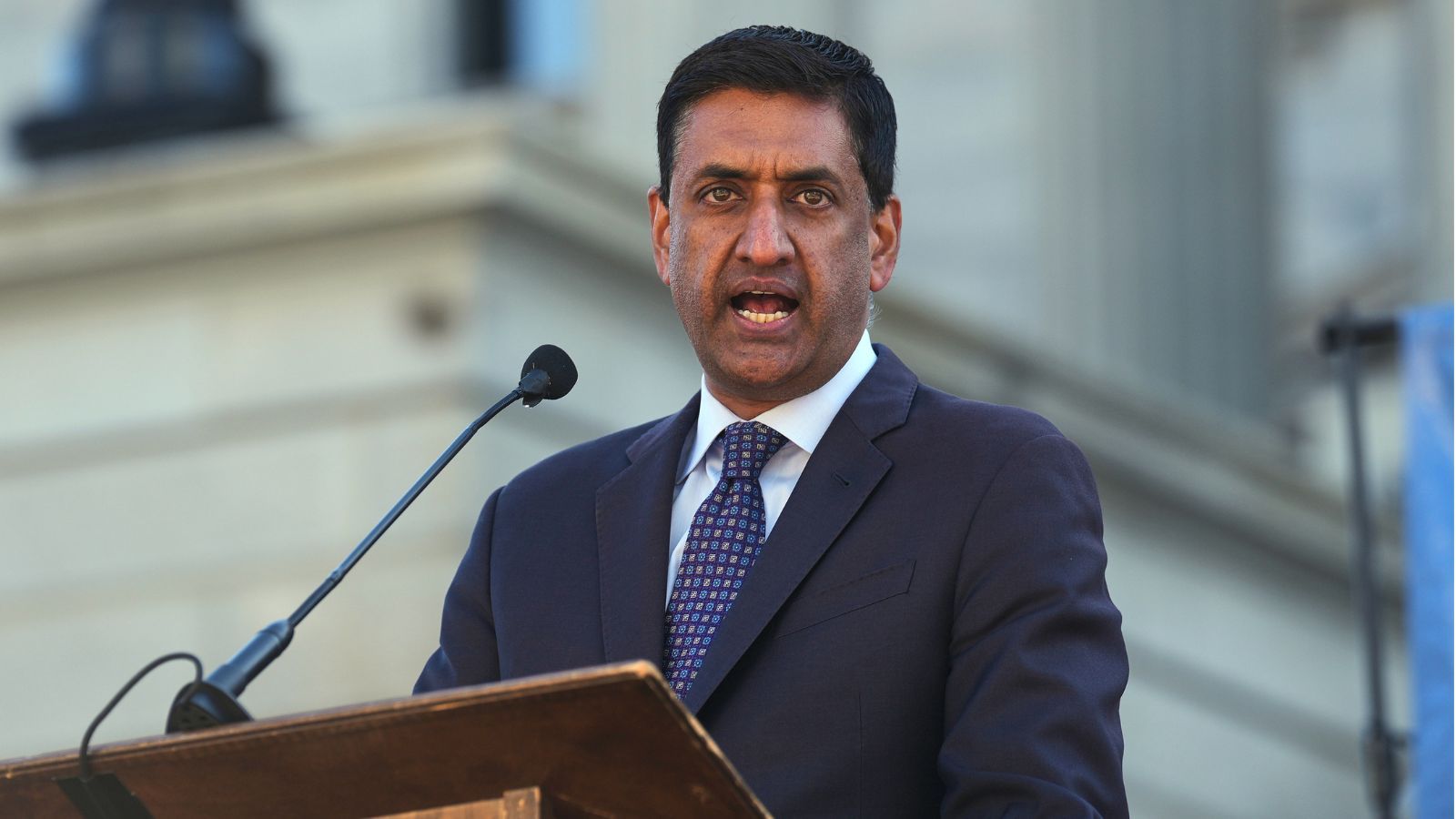
  • Congressman Ro Khanna Says He Was Detained by Israeli Settlers in the West Bank

    Congressman Ro Khanna, a California Democrat, said he was detained for over an hour by armed Israeli settlers in the occupied West Bank on Wednesday, July 8, 2026, in an incident that has drawn national attention and sharply divided political reaction. The Israeli military disputes key parts of his account.

    What Khanna Says Happened

    Khanna, who represents California’s 17th district in Silicon Valley, said the incident occurred while his group was visiting Khirbet Zanuta, a small Palestinian Bedouin village in the southern West Bank that had been abandoned and demolished following escalating settler attacks. According to Khanna and an aide who was present, a vehicle carrying armed men blocked the narrow road out of the village, and the men began shouting and kicking the group’s minibus. Khanna said the settlers were carrying American-made M4 rifles.

    Khanna said Israeli military vehicles then arrived, but rather than clearing the settlers, soldiers spoke with them and moved a car to further block the road, extending the standoff. He said the group was eventually released after appeals to the U.S. Embassy in Jerusalem and intervention from Israeli police, roughly 90 minutes after it began. “I felt powerless in that situation, which is not an easy thing, as I have a lot of privilege in life,” Khanna said, adding that he wanted people to consider what similar treatment might be like for Palestinians without his platform or protection.

    A New York Times photographer traveling separately reportedly witnessed the confrontation, and CNN said one of its own crews was also present, having traveled to the area to cover the anniversary of a Palestinian-American man’s killing by settlers.

    The Israeli Military’s Response

    The Israel Defense Forces confirmed it received a report of Israeli civilians blocking the vehicles of foreign nationals and members of the press near the village, and said troops were dispatched and “quickly dispersed the Israeli civilians and reopened the blocked road.” The IDF disputed the characterization that its own soldiers detained the group, saying its troops did not take part in blocking the road. Separately, Israeli police reportedly noted the area was a closed military zone where civilian access is restricted.

    Political Reaction

    Reaction has split along familiar lines. The Council on American-Islamic Relations (CAIR) called on Congress to condemn the incident, with its national executive director arguing that if an elected American official can be stopped and intimidated, it illustrates what Palestinians face daily without similar protection or attention.

    Conservative commentators and outlets have been more skeptical, with some suggesting the timing was convenient given separate political turbulence Khanna faced days earlier over his public support for Maine Senate candidate Graham Platner, who withdrew from his race following a rape allegation. Some critics online and in conservative media argued Khanna was using the incident to distract from that controversy or to raise his profile as he weighs a 2028 presidential run — a possibility Khanna has openly acknowledged considering, telling Reuters he was “more resolved to consider it after this trip.”

    Broader Context

    The West Bank has seen a rise in settlement construction and settler violence against Palestinians in recent years. According to the Israeli rights group Yesh Din, fewer than 1% of complaints against settlers between 2016 and 2024 resulted in indictments. The United Nations considers Israeli settlements in the West Bank illegal, while the Israeli government has said instances of serious settler violence are exceptions and has condemned the worst cases.

    Khanna is not the first American political figure to visit the region amid the ongoing war in Gaza and its aftermath — U.S. lawmakers from both parties, including House Speaker Mike Johnson and Democratic Senators Chris Van Hollen and Jeff Merkley, have made similar trips over the past year. In May 2025, IDF troops fired what the military called “warning shots” near a delegation of diplomats visiting the West Bank, drawing criticism from several allied nations.

    As of publication, no further action has been announced by Congress or the Israeli government regarding the incident.

  • HMRC Admitted Overtaxing Millions of State Pensioners Since 2010

    HMRC has formally admitted overtaxing millions of state pensioners in an error dating back 15 years, after an investigation by Telegraph Money brought the issue to light. HMRC chief executive John-Paul Marks apologized in a letter to MPs, calling it a mistake that “matters, particularly to customers on fixed or limited incomes.”

    What Went Wrong

    The error traces back to a change made to HMRC’s PAYE system in 2010. Under HMRC’s own rules, a pensioner’s tax calculation should reflect 51 weeks at the current year’s state pension rate combined with just one week at the previous year’s lower rate, since the state pension rises each April under the triple lock — the guarantee that pensions increase by whichever is highest out of inflation, average earnings growth, or 2.5%. Instead, HMRC’s system applied the full 52 weeks at the higher, post-increase rate throughout the year, effectively taxing pensioners as if they’d received the new, higher rate for the entire 12 months rather than just 51 weeks of it.

    Who’s Affected and By How Much

    The scale is significant even if individual amounts are modest:

    • Around 1.4 million pensioners were overtaxed through the PAYE system.
    • Up to 955,000 more in Self Assessment and roughly 760,000 in Simple Assessment may also have been overcharged by the same error.
    • In the 2024-25 tax year alone, HMRC collected more than £2 million in extra tax from those affected, with the average overpayment around £2 per person for that year — small individually, but the error has compounded since 2010-11, meaning long-term losses for some pensioners are considerably higher.

    Why It Took So Long to Surface

    Perhaps the most striking detail is the timeline: HMRC has reportedly been aware of the issue since at least 2019 but only acknowledged it publicly after media scrutiny this year. Marks attributed the delay to the technical complexity of reconciling data between the Department for Work and Pensions, PAYE end-of-year processes, and Self Assessment and Simple Assessment systems, saying a solution had taken this long to develop.

    A tax commentator who helped bring the issue to public attention made the point that the amounts involved are small individually, but that isn’t really the point — the public should be able to trust what government services tell them without needing to independently verify the calculations themselves.

    Will Pensioners Get Refunds Automatically?

    Not automatically, as things stand — HMRC has not committed to issuing automatic repayments. Affected pensioners currently need to contact HMRC directly to have the error corrected and reclaim any overpaid tax. HMRC says it is developing a system fix intended to correct future calculations this summer.

    What Pensioners Should Do Now

    If you’ve received state pension income and paid tax on it via PAYE, Self Assessment, or Simple Assessment at any point since the 2010-11 tax year, it’s worth checking your tax records or contacting HMRC to confirm whether you were affected. Given HMRC hasn’t promised automatic refunds, the responsibility currently sits with individuals to flag the issue rather than wait for a correction to arrive unprompted.